
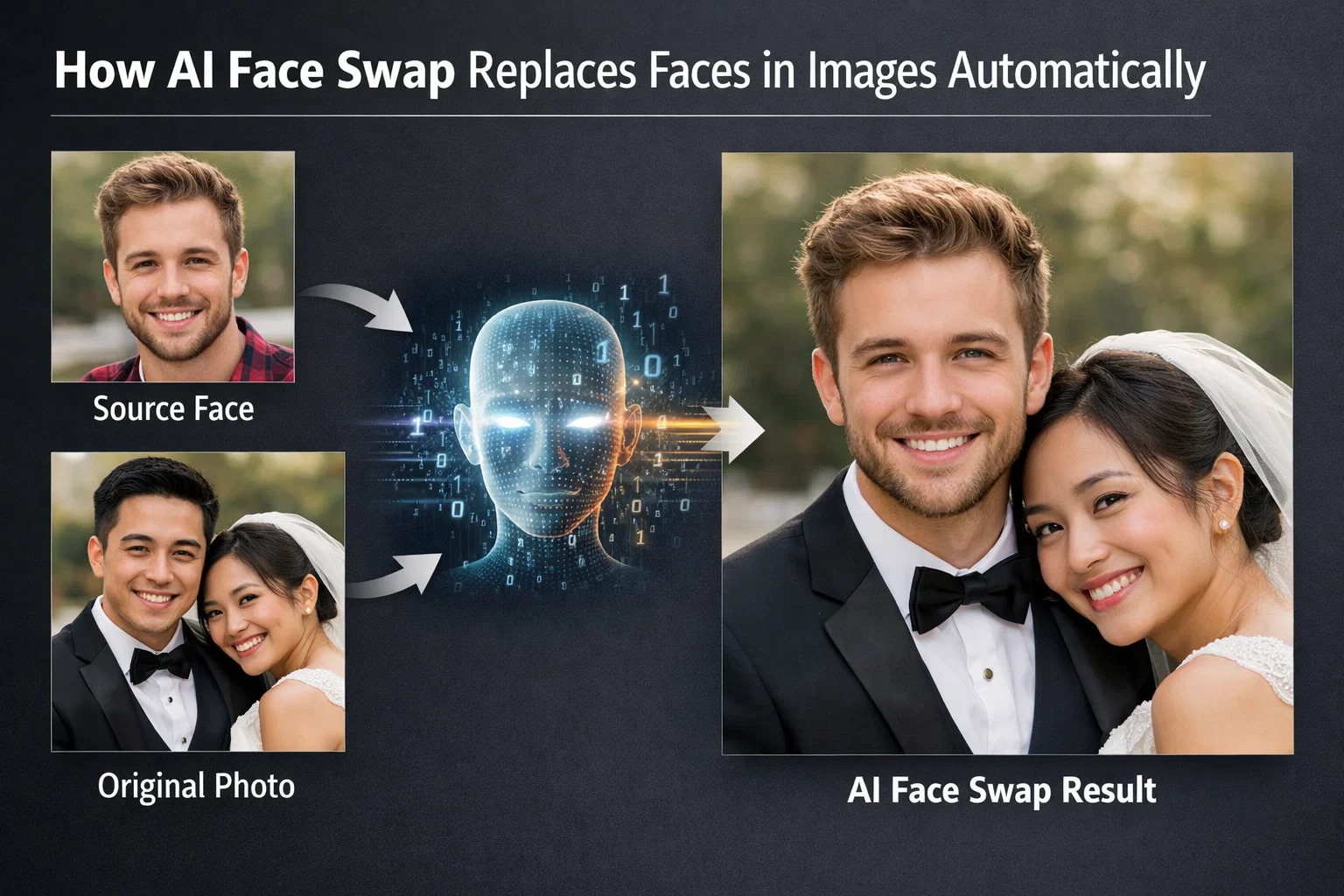
Artificial intelligence has transformed how people edit and create images. What once required professional design software and advanced editing skills can now be done automatically with AI-powered tools. One of the most interesting developments in this space is face swapping, where artificial intelligence replaces one person’s face in an image with another in just seconds.
Face swapping used to involve carefully cutting out faces, adjusting angles, correcting lighting, and blending layers manually. Today, AI performs all these tasks automatically. By analyzing facial structures and image context, modern tools can generate realistic results almost instantly.
This technology is now widely used by creators, marketers, designers, and everyday users who want to experiment with visual content. Understanding how AI face swap works helps explain why it has become such a powerful and accessible editing technique.
What is AI face swap in images?
AI face swap is a technology that allows users to replace one face in an image with another using artificial intelligence. The AI analyzes both the original image and the new face image, then recreates the face so it blends naturally into the photo.
Unlike traditional editing methods, which require manual adjustments, AI tools automate the entire process. The system identifies facial features such as the eyes, nose, mouth, and jawline. These landmarks help the AI understand how the face is positioned and how it should fit within the image.
Once the AI detects these features, it replaces the original face while maintaining the lighting, angle, and expression of the image. The result is a realistic transformation that appears naturally captured rather than edited.
This automation makes face swapping accessible to anyone. Even users with no editing experience can generate professional-looking results with just a few clicks.
How does AI face swap work automatically?
AI face swap works through a combination of facial detection, feature mapping, and intelligent image blending. These processes allow the system to analyze faces and recreate them in a new image environment.
Tools like ai face swap powered by invideo simplify the entire process. Users upload the original photo they want to modify, add the image containing the new face, and the AI performs the transformation automatically in seconds.
The first step in this process is facial detection. The AI scans the image and identifies where faces are located. It then marks key facial landmarks such as the eyes, nose, mouth, and jawline.
After detection, the AI performs feature mapping. This step compares the facial structure of the replacement face with the original one. The system adjusts proportions so the new face aligns perfectly with the head position in the image.
The final stage involves blending and rendering. The AI adjusts skin tones, shadows, and lighting conditions so the swapped face integrates smoothly into the image. This ensures the result looks realistic and natural.
Because these steps are automated, the entire process can take only a few seconds.
What technology powers AI face swapping?
AI face swapping relies on several advanced technologies that work together to generate realistic results. The most important of these are computer vision, machine learning, and deep neural networks.
Computer vision allows AI to recognize visual elements in an image. This technology helps the system detect faces and identify important facial landmarks. By understanding these structures, the AI can determine how the replacement face should be positioned.
Machine learning models are trained on large collections of facial images. These datasets teach the AI how faces behave under different conditions, including various lighting environments, angles, and expressions.
Deep neural networks play a crucial role in generating the final image. These networks analyze patterns in facial textures, shadows, and skin tones to ensure that the swapped face blends seamlessly into the original photo.
Together, these technologies allow AI to perform complex editing tasks automatically, something that would have required hours of manual work in the past.
Why are creators using AI face swap tools?
Creators are increasingly adopting AI face swap tools because they simplify the creative process and allow faster experimentation with visuals. Instead of spending hours editing photos, creators can test multiple ideas within minutes.
This is particularly useful for social media creators who constantly need fresh and engaging content. Face swapping allows them to produce entertaining visuals, creative edits, and storytelling experiments without relying on advanced editing skills.
Many creators combine this capability with broader creative workflows. Once an image is recreated using face swapping, it can easily become part of a larger content project such as social media visuals, storytelling posts, or marketing creatives.
In many cases, these visuals are later turned into videos using tools like an ai video app, allowing creators to transform edited images into complete video content. With mobile workflows becoming more common, creators can quickly move from image editing to publishing full video content directly from their devices.
What factors influence the quality of AI face swaps?
Although AI handles most of the editing process automatically, several factors can influence how realistic the final result appears.
Image resolution plays a significant role. High-resolution images provide more detail for the AI to analyze, which helps produce better facial alignment and smoother blending.
Lighting consistency is another important factor. When both images have similar lighting conditions, the AI can match shadows and highlights more accurately.
Facial angles also affect the outcome. Faces that are clearly visible and facing forward typically produce better results than images where the face is heavily tilted or partially hidden.
Expressions can also influence the quality of the swap. If both faces have similar expressions, the AI can generate a more natural transformation.
Despite these factors, modern AI systems are highly advanced and can adapt to many different image conditions.
How is AI face swap changing photo editing?
AI face swap is transforming photo editing by making complex techniques accessible to everyone. What used to be a professional editing skill is now a simple automated feature available to anyone with an internet connection.
For creators, this technology unlocks new forms of visual storytelling. They can experiment with characters, concepts, and creative visuals without spending hours editing.
For businesses, it provides an efficient way to produce engaging visual content. Marketing teams can generate personalized visuals, promotional graphics, and creative campaigns much faster than before.
AI face swap also encourages more experimentation in digital content creation. Since the editing process is automated, users can explore ideas freely without worrying about technical limitations.
As artificial intelligence continues to evolve, face swapping will likely become even more advanced, realistic, and widely used in creative workflows.
Conclusion
AI face swap technology has completely changed how faces are replaced in images. By combining facial detection, feature mapping, and advanced image synthesis, modern AI systems can perform complex transformations automatically.
This technology removes the need for manual editing and makes advanced visual effects accessible to anyone. Whether used by creators experimenting with new ideas or businesses producing engaging marketing visuals, AI face swap tools simplify the process of image transformation.
As artificial intelligence continues to improve, face swapping will become even more realistic and versatile. What started as a fun editing feature is quickly becoming a powerful tool for digital creativity and visual storytelling.